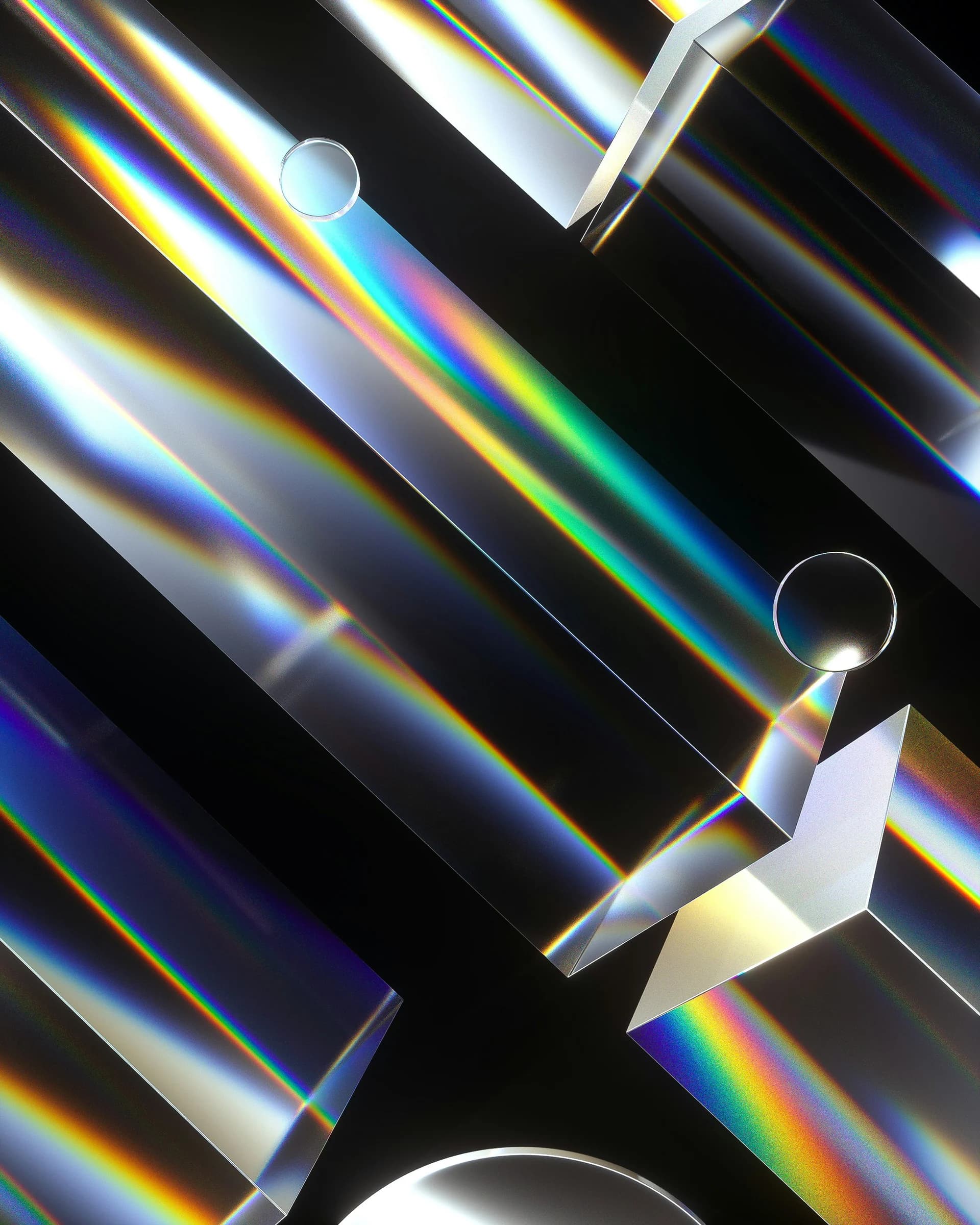
Observe the surface
Study the material under several lighting conditions. Notice the width of its highlights, its surface texture and whether the color changes near thin edges. A single photograph rarely tells the full story.
Separate the qualities you observe into manageable controls: base color, roughness, metalness, transmission and fine surface detail. Start simply before introducing variation.
Scale makes the difference
A texture can look convincing in isolation and still feel wrong on a product. Scratches, pores and grain need to match the physical scale of the object. Oversized imperfections often make a carefully modeled product feel miniature.
Subtle variation in roughness can do more for realism than a strong bump map. Keep clean commercial surfaces clean; realism does not require making every product look worn.
Test under neutral light
Build a small material test scene with a large soft source and a neutral environment. This helps distinguish a material problem from a lighting problem. Once the surface behaves predictably, bring it back into the campaign scene.
Keep reference images nearby and judge the material at its final viewing distance. Fine details should support the overall read, rather than become the subject themselves.